
It's been more than a year since you last had the chance to practice shooting at a range, and you want to book a coaching session rather than a block of time to practice alone. Useful to ask not how quickly you can get back to your old practices, but how to make the best first session, calm, safe and productive.
Start with an honest picture of the break
Start by realistically assessing how long you have been away from shooting in terms of your practical experience and set your expectations accordingly. While you may remember the basics of firearms safety, your ability to set up a firearm safely, apply basic shooting techniques and deal with issues that may arise are likely to have deteriorated to some extent over time. The extent to which you have been involved in informal shooting with family and friends at various times will not be the same as supervised live fire shooting at a shooting range.
Instead of focusing on the general safety rules for firearms, remember to the specific details of your last experience at a range. What did you shoot? Did you bring your own firearm or did the range supply them to you? Was your last experience at a range disturbing because of all the noise or because the other shooters and their benches were too close to you? Or were there even procedures that you were never quite sure of? All these things are useful to remember.
In recognition of how longer absences can lead to change in seemingly insignificant matters (i.e. where you place your equipment, how you hear shots to cease fire, how long a pause you take between steps etc.) it is useful to discuss these with your coach as well.
Book the right kind of support
In addition to ascertaining what kind of lessons or appointment the coach is offering, inquiring as to what sort of equipment will be used, whether or not a safety orientation will be covered and what the participant will require to bring to the lesson will serve to acquaint the shooter with the range's policies (which can change). Also, the facility will likely have certain rules such as minimum age, identification requirements, etc. which need to be adhered to.
Looking for a firearm safety refresher may mean that you want to complete a session of shooting practice that is tailored to your needs. Such a session will have a different pace to one with an experienced shooter who wants to improve his or her accuracy.
When booking a range coaching session it is also useful to let the coach know how long you have not been shooting for. Then you can ask for a coaching appointment for a shooting lesson to rebuild safe consistent shooting habits first and then work on the shooting accuracy that you are looking for.
Pack for less friction, not more gear
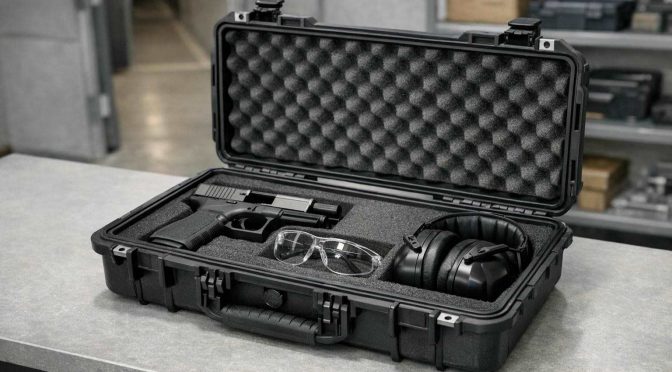
As it will be the first time that Jordan attends a shooting range in over a year, he should confirm the required information with the facility before he leaves for his coaching session and pack the minimum required amount of gear that he is permitted to bring. This will include any required identification, eye and ear protection, as well as his personal shooting equipment such as a firearm, and range personal gear such as his shooting clothes.
Clothing: This should be easy! We only need you to turn up in clothing that you can easily move around in in shooting clothing. Do not wear anything with loose accessories or lots of pockets. Also be aware that very baggy tops can cause problems as they can get in the way of your face and gun. Just wear normal, safe shooting clothing.
Additionally, it would be good to review any special storage and/or transport requirements for the firearms and ammunition that you plan to use at the range, and find out if there are any special items that you are required to bring to the range. This information is often changing so it is best to check directly with the range rather than relying on old information off of the web.
Use the first minutes to reset habits
Allow for enough time for check-in at the facility and to listen to the range briefing prior to commencing the lesson. Mention the break prior to the lesson commencement so the coach knows how long it's been since the participant last shot.
Jordan should make clear that a firearm safety refresher is not an extra which can be 'thrown in' at the end of a shooting practice session. By asking the coach to go through the various aspects of the safety of his or her own equipment as they are used at the range, Jordan will get to understand the various commands that the coach uses (e.g. ready); what he or she understands by cease-fire; which end of the gun the muzzle ought to be pointing; finger discipline for the trigger; and what sorts of things the coach expects him or her to do with the guns and related equipment.
Tell the coach you don't know something. Remember that there is lots of difference between quiet uncertainty and a straightforward question. The coach will be able to change an explanation to better suit you or even to demonstrate something in a safe practice situation. He or she can even abandon an activity altogether if necessary.
Let the coach set the pace
Most people who haven't shot for a long time have a tendency to revert to their old ways of shooting, hopefully better. But you will find that the first few shots are not as good as you remember your best shots. Therefore it is good to practice repeatable handling of the gun, attention to your surroundings, and good communication with your fellow shooters before you start to focus on scoring.
Remember, shorter practice periods, pauses to return to safe position, shooting a simpler setup all help the new shooter to practice and have others observe him/her in order to notice possible tension, confusions, fatigue or other concentrations problems before they become bigger problems.
Also, the shooting visit should enable a person to have a comfortable shooting experience. Extreme noise, uncomfortable equipment, poor eyesight or excessive stress all impact on concentration. If Jordan experiences any of these problems on his shooting visit, he must inform the coach immediately and the visit can be brought to an end if necessary.
Carry one useful lesson into the next visit
It doesn't have to solve all of your gun-related problems for the session to have been worth while. Perhaps the coach could give you 2-3 things to focus on for your next shooting session, and you could write those down as you leave the facility. Or perhaps they could give you a way to practice safety or communication that you hadn't thought of before. A good session of coaching will have given you some ideas for your next visit to the gun range.
For another outing at the gun range, set up your next session based on what actually happened during the refresher session and don't rely on a prior impression or a program that you feel you're behind on. Remember that there's no set time to go back to the gun range for more practice.
Honestly approaching the rest of the community at a shooting range is important. Everyone who goes to a gun range has different amounts of shooting experience, asks different questions, and can complete the same task at different times. By the participant being completely prepared for their lesson, the environment as a whole can be better. The shooter should conduct themselves in the best manner possible and treat the refresher for what it is: responsible shooting.